Trongsa Tshechu is one of Bhutan’s most historically rich and spiritually significant religious festivals, celebrated annually in the grand courtyard of Trongsa Dzong. As the ancestral home of Bhutan’s royal family and a pivotal stronghold in the nation’s history, Trongsa provides a dramatic and deeply meaningful setting for this sacred event.
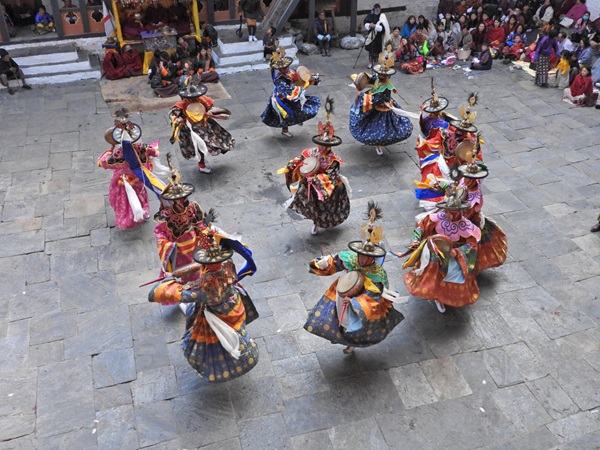
Like all tshechus, the festival honours Guru Rinpoche (Padmasambhava), the revered master who introduced Tantric Buddhism to Bhutan in the 8th century. Over several days, monks and lay performers present vibrant masked dances, ritual blessings, and sacred ceremonies against the magnificent backdrop of central Bhutan’s most strategic fortress.
Cultural and Spiritual Significance
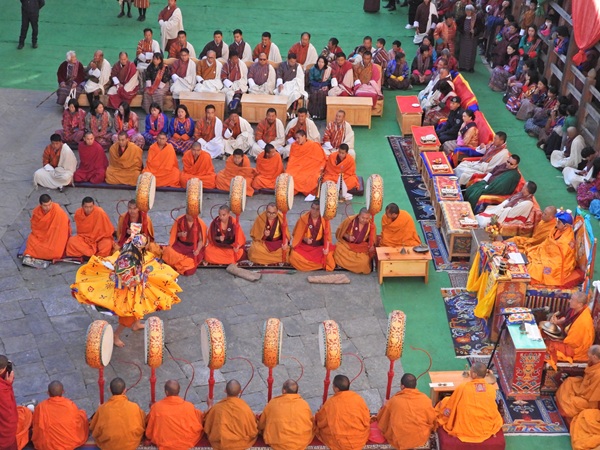
Trongsa Tshechu is a powerful expression of Bhutanese faith and heritage. The festival commemorates Guru Rinpoche, regarded as the “Second Buddha,” whose teachings remain central to Bhutan’s spiritual life. Witnessing the sacred dances is believed to purify negative karma, accumulate merit, and bring blessings for the year ahead.
Beyond its religious importance, the tshechu carries strong historical resonance. Trongsa Dzong was the seat of power for the Wangchuck dynasty before the monarchy was established in 1907. As such, the festival unfolds in a location deeply tied to Bhutan’s political unification and royal lineage.
For many Bhutanese, attending the Trongsa Tshechu is both a spiritual pilgrimage and a cultural homecoming.
When is Trongsa Tshechu Celebrated?
Trongsa Tshechu typically takes place in December or January, according to the Bhutanese lunar calendar. Dates vary each year.
Its winter timing offers crisp mountain air and clear skies, though mornings and evenings can be cold in central Bhutan.
Where is the Festival Held?
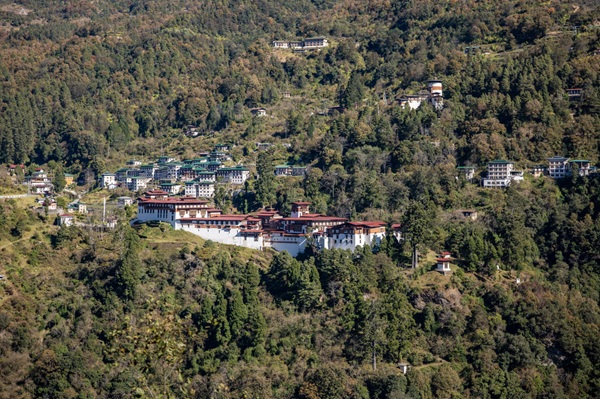
The festival is held in the expansive courtyards of Trongsa Dzong, Bhutan’s largest and most strategically located fortress. Perched dramatically above the Mangde Chhu gorge, the dzong commands the historic east–west trade route that once connected the kingdom.
Located roughly midway between western and eastern Bhutan, Trongsa is often included in cross-country itineraries, making the tshechu a compelling cultural highlight for travellers journeying through central Bhutan.
Highlights of Trongsa Tshechu
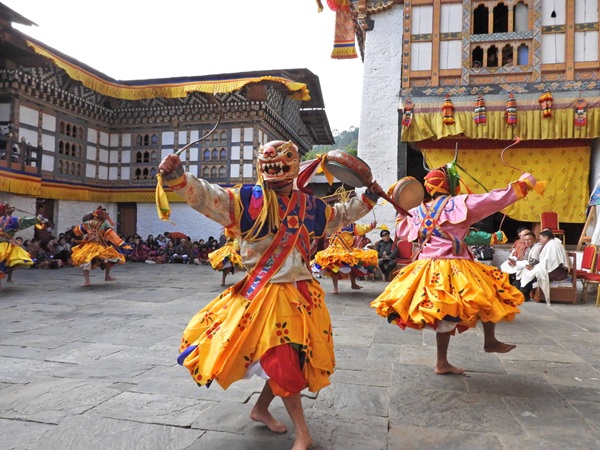
Sacred Cham Dances: Monks and lay dancers perform traditional masked dances depicting episodes from the life of Guru Rinpoche and other Buddhist teachings. Each cham carries symbolic meaning and spiritual significance.
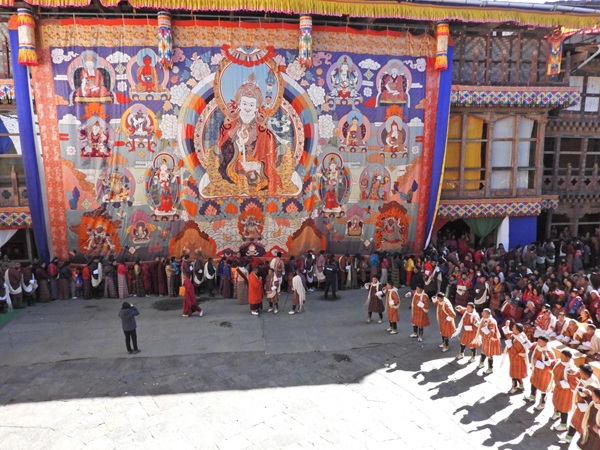
Thongdrel Unfurling: On the final morning, a giant sacred thongdrel of Guru Rinpoche is displayed briefly at dawn. Witnessing it is believed to cleanse sins and bestow profound blessings.
Royal Heritage Setting: Experiencing a tshechu in Trongsa Dzong — the ancestral seat of Bhutan’s monarchy — adds unique historical depth to the festival.
Community Celebration: Locals from surrounding valleys gather in their finest ghos and kiras, creating a colourful and festive atmosphere.
Panoramic Dzong Views: The multi-tiered architecture of Trongsa Dzong provides dramatic vantage points for photography and observation.
Tips for Travellers
Arrive Early for the Thongdrel: The sacred scroll is displayed only briefly at dawn on the final day.
Dress Warmly: Winter mornings in Trongsa can be chilly — bring layers.
Dress Respectfully: Modest attire is essential; traditional Bhutanese dress is welcomed.
Allow Time for the Journey: Roads to Trongsa are scenic but winding — plan comfortable travel time.
Combine with Central Bhutan: Pair the festival with visits to Bumthang, Trongsa Ta Dzong, and the Trans Bhutan Trail.
Getting to Trongsa
Most travellers reach Trongsa via an overland journey from Thimphu or Punakha, typically a 6–7 hour scenic drive crossing Dochula Pass and central Bhutan’s forested mountains. Many itineraries continue onward to Bumthang after the visit.
While there is no commercial airport in Trongsa, the overland journey is considered one of Bhutan’s most beautiful drives.
What to See Around Trongsa
Trongsa Ta Dzong: The watchtower museum above the dzong, offering excellent historical insight.
Bumthang Valley: Just a few hours east, home to many of Bhutan’s oldest temples.
Mangde Chhu Viewpoints: Scenic river valley views below the dzong.
Trans Bhutan Trail Sections: Historic walking routes pass through the Trongsa region.
Why You Shouldn’t Miss It
Trongsa Tshechu is where Bhutan’s spiritual devotion and royal history converge. The setting is majestic, the dances deeply meaningful, and the atmosphere unmistakably authentic. For travellers seeking more than just beautiful scenery — those drawn to the living story of Bhutan — this festival offers a powerful window into the kingdom’s heart, heritage, and enduring faith.
Book a Trongsa Tshechu Tour
Find out more
Festival Dates
- Dec 17, 2026 - Dec 21, 2026
Plan your trip
Our team will get back to you within 24 hours.
