Thangbi Mani Festival is one of Bhutan’s most distinctive and culturally vibrant community festivals, celebrated annually in Thangbi village in Bumthang Valley. Unlike the larger dzong-based tshechus, this rare village festival blends sacred Buddhist rituals with lively local traditions, offering visitors an intimate glimpse into rural Bhutanese life.
Held at the historic Thangbi Lhakhang, the festival is best known for its unique fire ritual and the dramatic sword dance performed by local villagers. Rooted in centuries-old spiritual practice, Thangbi Mani reflects the deep interweaving of faith, folklore, and community identity in central Bhutan.
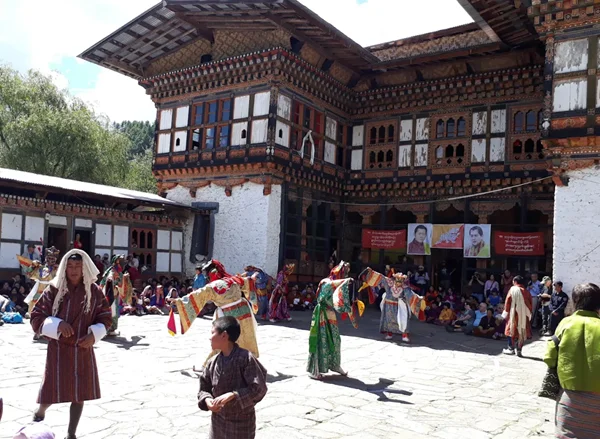
Cultural and Spiritual Significance
Thangbi Mani Festival is both a religious observance and a vibrant community celebration. The festival honours Guru Rinpoche and the protective deities of the region, while also reinforcing social bonds within the village.
One of its most remarkable aspects is the active participation of lay villagers alongside monks. The performances — especially the sword dance — are believed to invoke protection, purify negativity, and bring blessings to the community.
Because it is not a major commercialised festival, Thangbi Mani preserves a strong sense of authenticity and living tradition that is increasingly rare in the Himalayan region.
When is Thangbi Mani Celebrated?
Thangbi Mani Festival typically takes place in September, according to the Bhutanese lunar calendar. Dates vary slightly each year.
The timing coincides beautifully with early autumn in Bumthang, when the valley begins to turn golden and the weather is generally clear and pleasant — ideal for travellers exploring central Bhutan.
Where is the Festival Held?
The festival is held in the courtyard of Thangbi Lhakhang, an important Nyingma temple located in Thangbi village in Bumthang District. The temple is believed to date back to the 15th century and is closely associated with the revered treasure revealer Pema Lingpa.
Thangbi village lies about 8 kilometres from Jakar town and is easily accessible by road, making it one of the more convenient rural festivals to attend in Bumthang.
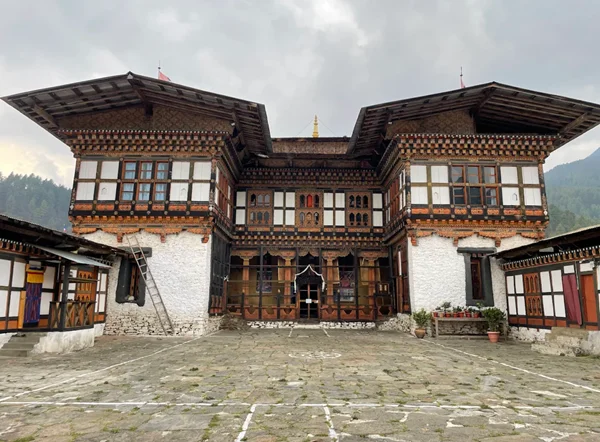
Highlights of Thangbi Mani Festival
Mewang Fire Ritual: One of the most spectacular moments of the festival is the traditional fire blessing ceremony, where participants pass through or around sacred flames believed to purify obstacles and confer blessings.
Drametse Ngacham–Style Performances: Masked dances and ritual performances reflect the rich religious traditions of Bumthang, performed by both monks and trained lay dancers.
Sword Dance by Villagers: A rare and energetic highlight, local men perform a traditional sword dance symbolising protection and courage. This is one of the festival’s most distinctive cultural elements.
Intimate Village Atmosphere: Unlike major tshechus, the festival feels close-knit and immersive, allowing meaningful interaction with locals.
Traditional Attire and Community Gatherings: Villagers gather in their finest ghos and kiras, creating a colourful and warm festive environment.
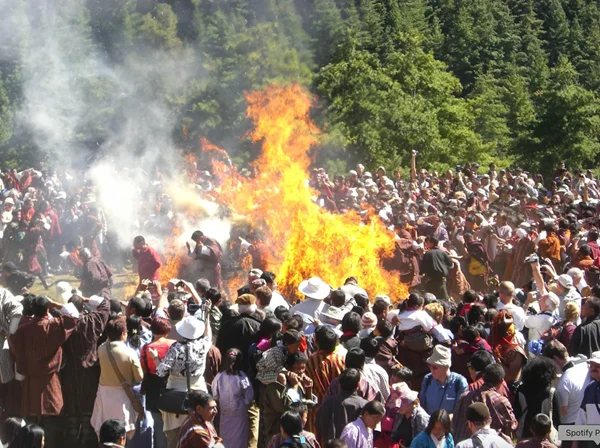
Tips for Travellers
Arrive Before Sunset: Many of the most atmospheric rituals, including the fire ceremony, take place in the evening.
Bring Warm Layers: Bumthang evenings in September can be cool, especially after sunset.
Respect Ritual Spaces: Some ceremonies are deeply sacred — follow local guidance on where photography is permitted.
Stay Overnight in Bumthang: This allows you to experience both the daytime festivities and the dramatic evening rituals without rushing.
Engage with the Community: This is one of the best festivals in Bhutan for meaningful cultural interaction.
Getting to Thangbi
Most travellers reach Bumthang via a domestic flight to Bathpalathang Airport or by an overland journey from Trongsa. From Jakar town, Thangbi village is about a 20-minute drive through the scenic Chokhor Valley.
Because of its accessibility, Thangbi Mani pairs well with visits to other major Bumthang sites.
What to See Around Thangbi
Jakar Dzong: The “Castle of the White Bird” overlooking Bumthang Valley.
Jambay Lhakhang: One of Bhutan’s oldest temples, closely linked to Guru Rinpoche’s legacy.
Kurjey Lhakhang: Sacred temple complex marking Guru Rinpoche’s body imprint.
Bumthang Valley Walks: Gentle cultural walks through some of Bhutan’s most beautiful pastoral landscapes.
Why You Shouldn’t Miss It
Thangbi Mani Festival offers something increasingly rare in Bhutan: authenticity without crowds. Here, the rituals feel immediate, the community welcome is genuine, and the cultural experience unfolds at a human pace. For travellers seeking depth over spectacle, this festival reveals the living heartbeat of Bumthang — where fire, faith, and folklore come together in one unforgettable celebration.
Book a Thangbi Mani Festival Tour
Find out more
Festival Dates
- Sep 26, 2026 - Sep 27, 2026
Plan your trip
Our team will get back to you within 24 hours.
